


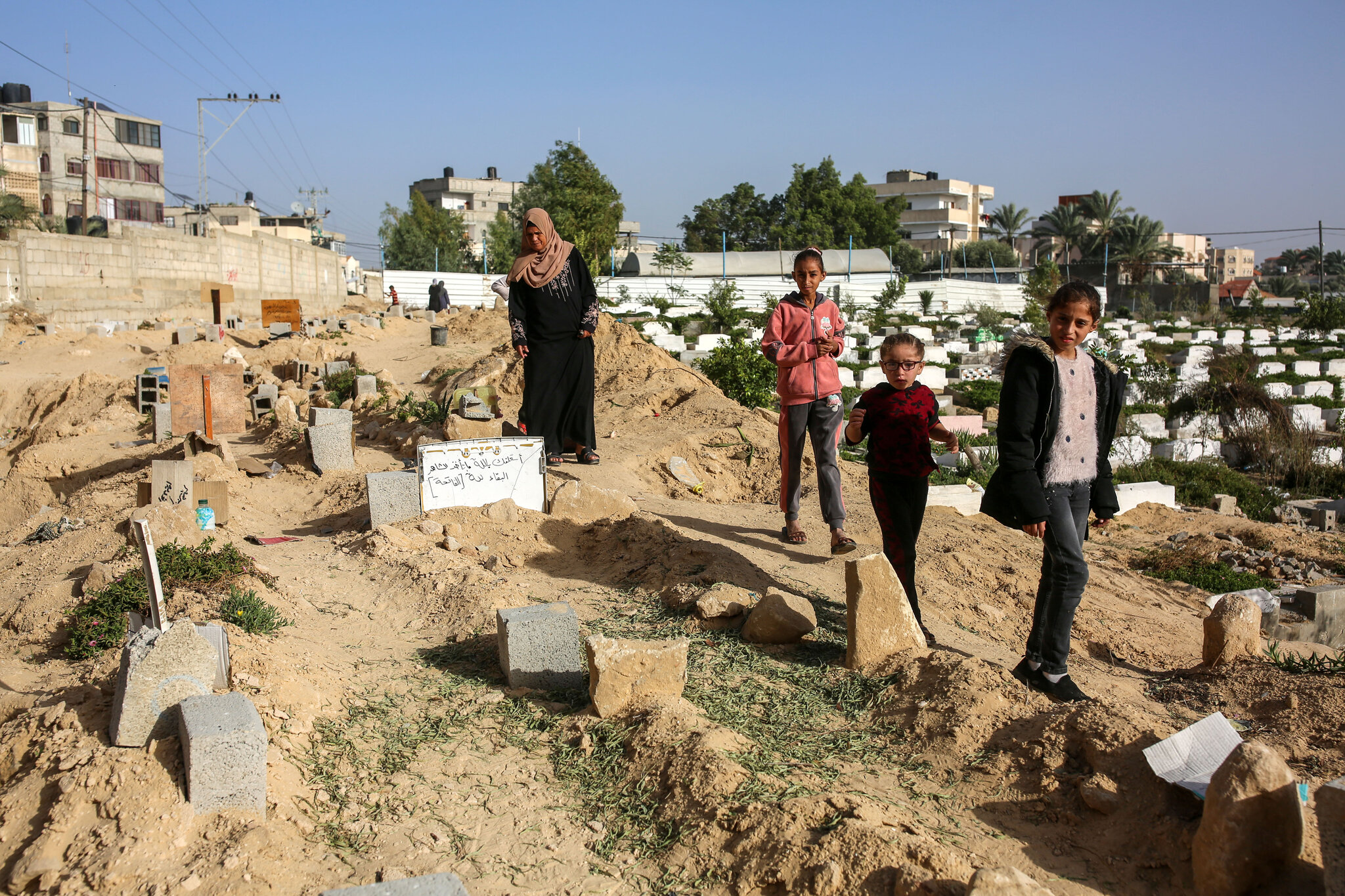
Fatima Abdullah says the images will not leave her mind. This week, the al-Batsh cemetery in the Tuffah neighbourhood east of Gaza City was excavated and heavily damaged during an Israeli military operation to recover the body of a captive, reopening deep wounds for families who buried their loved ones there.
Among the graves is that of Fatima’s husband, Mohammad al-Shaarawi, killed in an Israeli drone strike on December 11, 2024, while walking with friends in Tuffah. At the time of his death, Fatima and her three children had already been displaced to southern Gaza.
The knowledge that military search operations were centred on the cemetery filled her with dread.
“We were all on edge,” she told Al Jazeera. “Everyone feared it would be their loved one’s grave next. I kept imagining the machinery reaching my husband’s grave, and I prayed it wouldn’t happen.”
‘Even the Dead Were Not Spared’
During the operation, Israeli forces examined roughly 250 graves in a short period, using bulldozers and heavy machinery. Aerial images show widespread destruction: tombstones crushed, graves exhumed, and the cemetery’s layout drastically altered.
Fatima described scenes she says stripped families of their final right to dignity.
“Graves were bulldozed. Remains were scattered — bones, bags thrown aside — treated as if they were nothing,” she said. “Even the dead were not spared.”
Before the war, Fatima regularly visited her husband’s grave with her children, including on holidays and birthdays.
“The children didn’t feel it was a sad place,” she said. “They felt they were visiting their father.”
That changed after mass evacuations from Shujayea in June 2024, when heavy bombardment made the area inaccessible. Even after a ceasefire was declared in October 2025, the cemetery remained near a restricted military zone, preventing families from returning.
“No one knows what was taken or what was put back — if anything at all,” Fatima said, hoping a future phase of the ceasefire will allow her to reach the site. “We were denied the chance to mourn properly, and now even the graves are gone.”
A Pattern of Cemetery Destruction
Human rights organisations say the damage at al-Batsh is part of a broader pattern. According to the Euro-Med Human Rights Monitor, Israeli military operations have destroyed or severely damaged around 21 of Gaza’s 60 cemeteries, often mixing remains or leaving families uncertain about the fate of their relatives.
Documented sites include cemeteries in Beit Hanoon, Jabalia, Gaza City, and Khan Younis, as well as the historic Gaza War Cemetery, which contains graves of soldiers from the First and Second World Wars.
Earlier this month, Euro-Med urged urgent international intervention to halt land levelling in Rafah, warning that bodies could be lost without proper recovery, identification, or burial.
Hamas condemned the exhumations, calling them unlawful and unethical, and criticised the international community for failing to hold Israel accountable.
Buried Without Goodbye
For Madeline Shuqayleh, the destruction of al-Batsh cemetery reopened the pain of losing her sister, Maram, and Maram’s four-month-old daughter, Yumna. Both were killed in an Israeli strike on October 28, 2023, while the rest of the family was displaced in Deir el-Balah.
The family later located their graves at al-Batsh. “The tombstone was there, intact,” Madeline recalled. “The pain was unbearable, but at least we knew.”
Now, she says, even that has been taken away. “It’s as if they killed her again.”
The family still does not know whether the bodies were disturbed or whether the graves were restored.
‘My Father Has No Grave Today’
Rola Abu Seedo faces a similar uncertainty. Her father died on April 28, 2024, alone in Gaza City after refusing to evacuate despite severe illness and a collapsed healthcare system. With communications nearly severed, the family learned of his death only later.
He was buried in a temporary cemetery near al-Shifa Hospital. After a subsequent Israeli incursion, bulldozers levelled the area, erasing all grave markers.
“Our relatives went back and couldn’t find his grave,” Rola said. “It had been completely bulldozed.”
Despite later forensic efforts to recover remains, her father’s body was never found.
“We don’t know if the bodies were moved, mixed, or taken,” she said. “My father has no grave today.”
For families across Gaza, the loss extends beyond death itself — reaching into the final moments of remembrance.
“It’s not only that we lost them while they were alive,” Rola said. “We were denied the farewell after death.”