


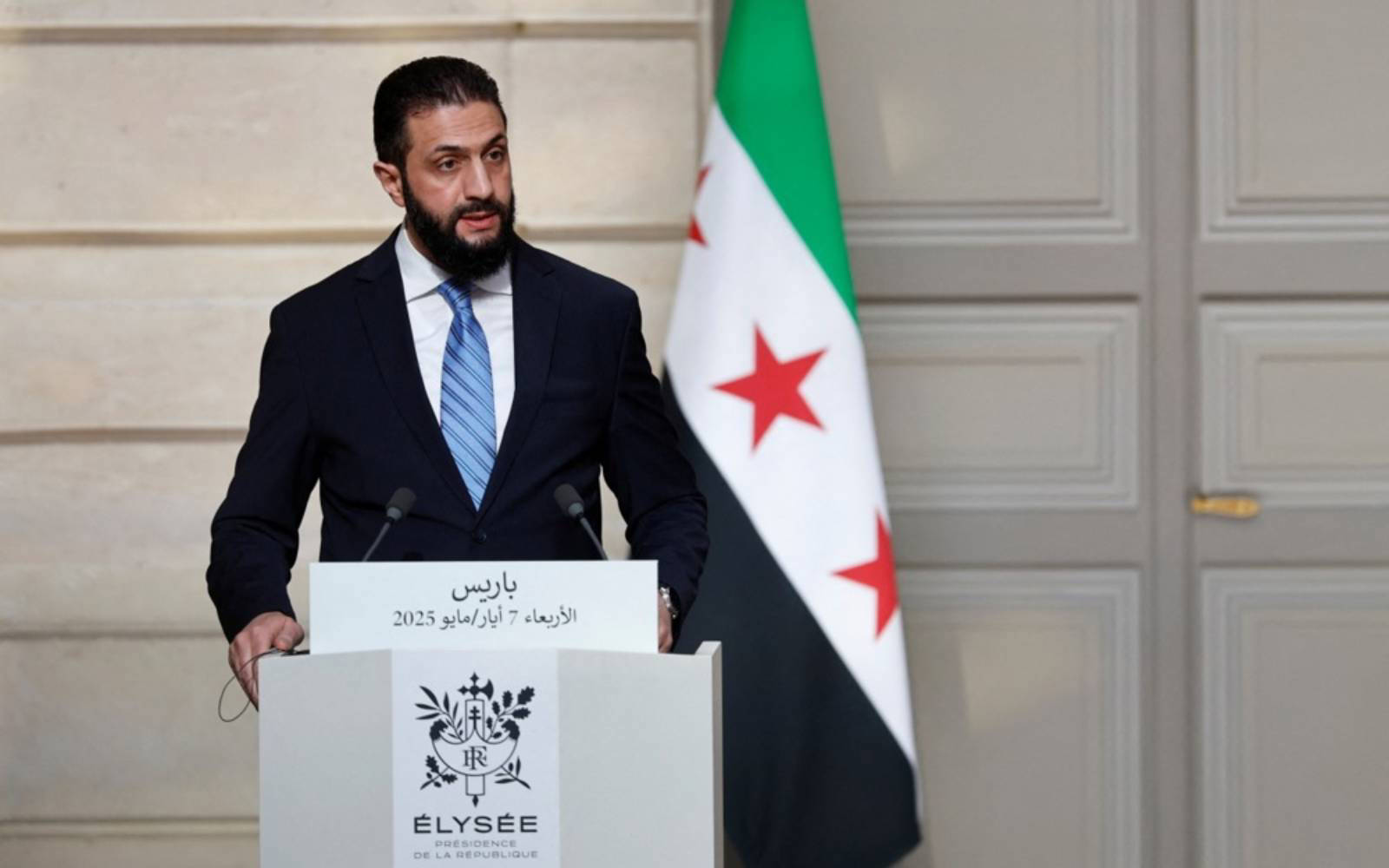
Syria President Ahmed al-Sharaa has issued a decree formally recognising Kurdish as a national language and restoring Syrian citizenship to Kurdish residents who were previously rendered stateless, marking a major policy shift after years of conflict and marginalisation.
The decree, announced on Friday, follows a surge of violence in the northern city of Aleppo that left at least 23 people dead, according to the health ministry, and forced tens of thousands of residents to flee Kurdish-administered areas of the city.
Decree Grants Long-Sought Kurdish Rights
For the first time, the new decree acknowledges Kurdish identity as an integral part of Syria’s national fabric. It designates Kurdish as a national language alongside Arabic and permits its instruction in schools.
The measure also overturns policies dating back to a 1962 census in Hasakah province that stripped large numbers of Kurds of Syrian nationality. Under the decree, citizenship is restored to all affected individuals, including those long registered as stateless.
In addition, the decree declares Newroz — the Kurdish spring and new year festival — a paid national holiday, bans ethnic and linguistic discrimination, and requires state institutions to adopt inclusive national messaging. It also introduces penalties for incitement to ethnic hatred.
Kurdish Authorities Offer Cautious Response
The Kurdish administration governing parts of northern and northeastern Syria welcomed the decree but described it as insufficient.
“This is a first step, however it does not satisfy the aspirations and hopes of the Syrian people,” the administration said in a statement, stressing that lasting rights must be enshrined in a permanent constitution rather than temporary decrees.
Army Takes Control After SDF Withdrawal
The announcement came as Syrian government forces moved to consolidate control in areas around Aleppo following recent clashes with the Kurdish-led Syrian Democratic Forces (SDF).
On Saturday, the Syrian army said it had established full military control over Deir Hafer, east of Aleppo, after SDF units agreed to withdraw. State television reported that government forces had entered multiple locations previously held by the SDF in the Aleppo governorate.
SDF commander Mazloum Abdi, also known as Mazloum Kobani, said the withdrawal followed appeals from mediators and friendly countries, with forces redeploying east of the Euphrates.
Ongoing Power Struggle
The fighting in Aleppo has highlighted deep political and ethnic divisions in Syria, where al-Sharaa has pledged to reunify the country after 14 years of war and the removal of former president Bashar al-Assad in December 2024.
The SDF controls large areas of Syria’s oil-rich north and northeast, territory it secured during the civil war and the campaign against ISIL. It has long been backed by the United States as a key regional ally.
Talks last year between Damascus and the SDF aimed at integrating Kurdish armed and political structures into state institutions by the end of 2025 made little progress, a stalemate that ultimately preceded the Aleppo clashes.
Regional Sensitivities
Millions of Kurds live across Syria, Iraq, Iran and Türkiye, with an estimated one to 1.5 million in northeastern Syria. Ankara, a key ally of Damascus, considers the SDF and its leading factions to be linked to the outlawed Kurdistan Workers’ Party (PKK), a designation that continues to shape regional tensions.
While the new decree signals a potential opening toward reconciliation, analysts say its impact will depend on whether promised rights are implemented nationwide and anchored in a future constitution as Syria seeks stability after years of conflict.