


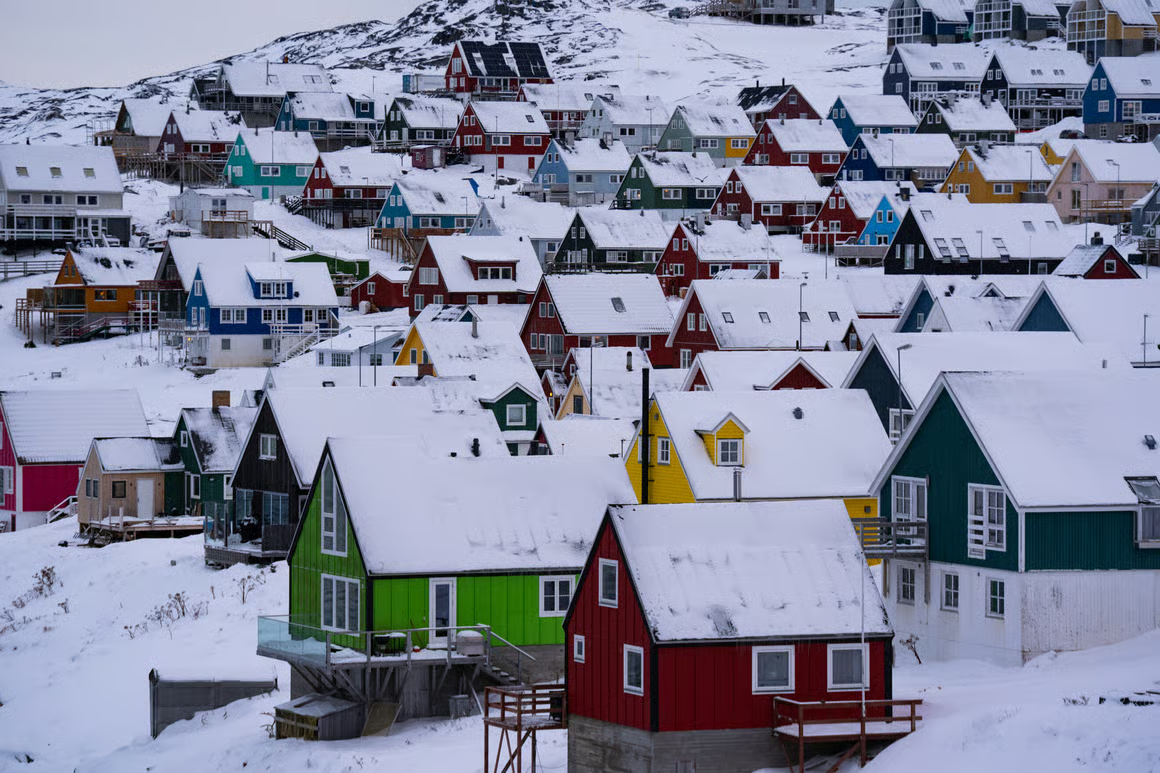
What options do small nations have when confronted by far more powerful states? For Greenland, this is no longer a theoretical question. The Arctic territory’s autonomy—and potentially its long-term future—has become a live geopolitical issue.
Greenland remains a territory of Denmark, though it has exercised broad self-rule since 2009. Under its current arrangement, Greenland has the right to pursue full independence whenever it chooses. Political consensus on the island favours eventual independence, but economic realities have so far kept it tied to Copenhagen.
That calculation is being complicated by renewed pressure from Donald Trump, who has made no secret of his interest in bringing Greenland under US control. Recent international actions by Washington have reinforced the perception in Europe that such statements should be taken seriously.
Europe confronts an unthinkable scenario
The possibility of the United States annexing territory from a fellow NATO member was once dismissed as implausible. Today, European capitals are treating it as a genuine diplomatic crisis.
While the White House has not explicitly confirmed plans to use force, it has also declined to rule that option out. Trump himself has repeatedly signalled a preference for a transactional solution, framing Greenland as a strategic and economic asset rather than a sovereign political entity.
Denmark, despite its NATO membership, would struggle to resist any direct military pressure. Greenland’s defence is limited, overseen by Denmark’s Joint Arctic Command, which consists mainly of patrol vessels, surveillance units, and search-and-rescue teams. Trump has publicly mocked the scale of Denmark’s military presence, but the imbalance in power is clear.
The US already has a foothold
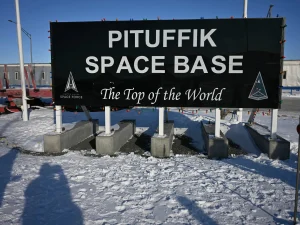
Washington is not starting from zero in Greenland. Under a 1951 defence agreement with Denmark, the US already operates a major military installation in northwestern Greenland. The base hosts hundreds of personnel, including members of the US Air Force and Space Force, and allows for the establishment of additional facilities if required.
In response to growing concerns, Copenhagen has announced an additional $4.2bn in Arctic defence spending and plans to expand its fleet of F-35 fighter jets. Even so, European officials privately acknowledge that Denmark could not withstand sustained pressure from the US military alone.
A diplomatic strategy takes shape
Facing limited military options, Europe has moved swiftly to present a united diplomatic front. Officials are attempting to redirect Trump’s demands by reframing Arctic security as a collective NATO issue rather than a bilateral dispute.
NATO Secretary-General Mark Rutte and leaders in Germany and the United Kingdom have publicly floated the idea of expanding NATO deployments in Greenland. German officials have also engaged directly with Washington in advance of high-level meetings involving Danish and Greenlandic representatives.
The message from Europe has been consistent: Arctic security concerns are legitimate, but unilateral action would fracture the alliance. NATO, they argue, offers a solution without undermining sovereignty.
Trump remains unmoved
So far, Trump has shown little interest in compromise. Offers to expand US military access under existing treaties have been dismissed as insufficient. Warnings that annexing Greenland could effectively end NATO have not altered his stance.
Trump has also continued to repeat claims that Russia and China are positioning themselves to seize influence over Greenland, despite European officials disputing the immediacy of such threats.
Concessions or a strategic compromise?
Some analysts suggest Europe could eventually seek an exit strategy by accelerating Greenland’s path to independence. If Greenlanders voted for sovereignty, Denmark’s allies could argue that the island’s fate lay outside their responsibility. For now, however, European leaders remain firmly aligned with Copenhagen and Nuuk, insisting that Greenland is not for sale.
What may emerge instead is a carefully managed compromise: expanded US military access, combined with preferential rights to Greenland’s mineral and rare earth resources. Such an arrangement could allow Trump to claim a strategic victory while preserving NATO unity and avoiding a direct confrontation.
For Europe, the goal is simple—prevent a rupture in the transatlantic alliance. Whether that can be achieved without meaningful concessions remains an open question.