



Indonesia revised criminal code, set to take effect on January 2, 2025, is being framed by the government as a major modernization of national law. However, a senior minister has acknowledged concerns about possible abuse of its provisions and emphasized that public monitoring will be essential to safeguard citizens’ rights.
The 345-page law, originally passed in 2022, spans 345 pages in its official form and replaces a legal framework that had been in place since the Dutch colonial administration. The overhaul, decades in the making, was approved during former President Joko Widodo’s final term in office. At the time of its passage, international partners including the United States raised objections. Then-U.S. Secretary of State Antony Blinken urged President Widodo to reconsider several clauses, citing potential risks to personal freedoms.
A Timely Reform with Imperfections
Law Minister Supratman Andi Agtas told Reuters on Tuesday that reforming the code was the right move for Indonesia’s current era but admitted that expanded enforcement powers come with real risks.
“There will be that,” Agtas said by phone, referring to the possibility of law misuse. “We’re not blind. But what matters most is public control. Anything new will not be immediately perfect.”
His remarks reflect a balancing act between government confidence in reform and civil society’s unease. Rights advocates have criticized the law’s broad definitions, which they say could threaten free speech, civil liberties, and legal protection for government critics. Activists warn that the vague wording could allow selective enforcement or lead to arrests of dissenting voices.
New Rules on Personal Conduct and State Criticism
One of the most debated changes involves morality law. The new code will classify sexual relations outside marriage as a criminal offense, punishable by up to one year in prison. Unlike adultery laws in some countries, enforcement will only proceed if a spouse, parent, or child files a formal complaint. Under the old system, only adultery between married individuals was prosecutable. This new revision broadens the scope to include unmarried couples but adds a reporting requirement intended to prevent mass criminalization or misuse.
Tourism leaders say this mechanism has eased industry fears. Hariyadi Sukamdani, chair of the Confederation of Indonesia Tourism Association, said the complaint-based system reduces the likelihood that foreign visitors will be directly affected. Tourism organizations previously warned that criminalizing unmarried intimacy could damage Indonesia’s global reputation and disrupt the travel sector.
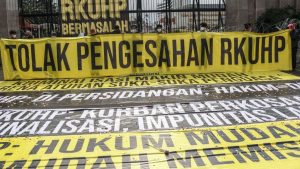
The code also tightens penalties for state defamation. Citizens found guilty of insulting the president, government institutions, or state agencies could face up to three years behind bars. Meanwhile, spreading communist ideology or doctrines considered contrary to Indonesia’s national philosophy may result in prison sentences of up to four years.
Another new clause defines “attacking honor or dignity” in legal terms. According to the code, this includes acts that harm someone’s reputation or sense of personal worth. This can apply to libel, defamation, or damaging statements made publicly. Legal experts say this language is unusually expansive and could overlap with Indonesia’s digital speech landscape, where disagreements frequently unfold online.
Experts Call the Law a Self-Made Colonial Echo
Some legal scholars argue the law repeats colonial patterns under a new name. Asfinawati, a legal expert widely known by one name, said this week that the provisions resemble old power-heavy frameworks despite being written domestically.
“This is a new colonial set of laws, made by our own,” she said, warning that broad legal text does not guarantee fair enforcement. She also expressed doubt that authorities will consistently interpret or apply the law as intended, especially when it involves political sensitivity.
Her concerns echo those of free speech groups who say the definition of “insults” lacks boundaries. They argue the law gives enforcers too much interpretive freedom and insufficient clarity about what constitutes legitimate criticism versus prosecutable speech.
Government Says Guardrails Are Already in Place
In response to criticism, Supratman Andi Agtas said law officers nationwide have been briefed on the updated code. He also noted that the criminal code will operate alongside a separate criminal procedure law, also set to take effect later this week. The government says both laws include internal safeguards to limit misuse, though details about enforcement standards remain under public discussion.
Agtas said the new system reflects Indonesia’s cultural and legal identity, adding that it is not meant to mirror Western or foreign legal models. “It’s our own legal system,” he said. “Different from other countries.”
Officials have also highlighted modern approaches within the code, including restorative justice policies and alternatives to purely punitive sentencing. These mechanisms, the ministry says, are part of a broader shift toward rehabilitation, conflict resolution, and community-based justice outcomes.
Public Oversight Seen as the Deciding Factor
Despite assurances, the minister repeatedly underscored that citizen involvement will matter most. Public control, legal literacy, media scrutiny, and community monitoring are being positioned not as optional add-ons but a key pillar of preventing abuse.
Experts say oversight may take many forms, including watchdog organizations, academic review, press coverage, public reporting systems, and digital activism. Since the law includes complaint-based triggers for some offenses, the public will indirectly shape how often the law can even be activated.
For young Indonesians watching this unfold, the conversation has also opened debates about digital rights, cultural values, free expression, legal modernization, and the role of citizens in monitoring institutions. The code’s enactment marks a historic transition—but whether it strengthens justice or restricts it may depend on how effectively society participates in overseeing it.