


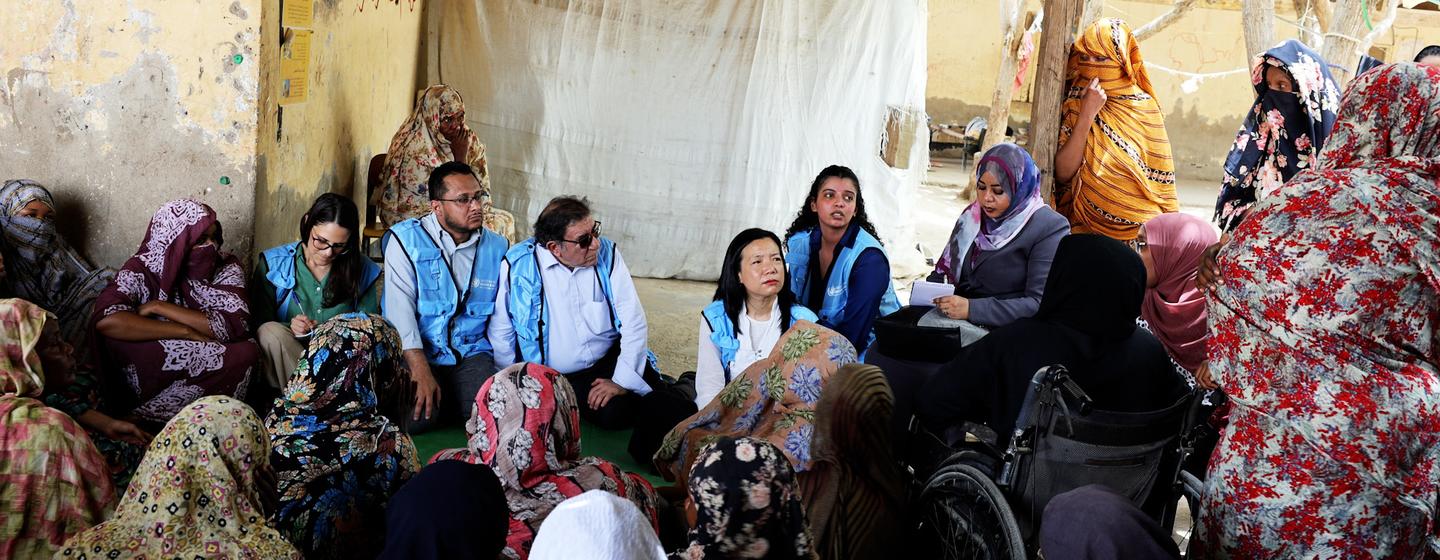
The United Nations has once again urged Sudan warring factions to halt hostilities, as Secretary-General Antonio Guterres appealed for an immediate nationwide truce on Friday. The UN has described the conflict as the most severe humanitarian emergency in the world today, citing massive civilian displacement, infrastructure threats, and rising cross-border instability.
Guterres’s statement comes days after Prime Minister Kamil Idris delivered a peace proposal to the UN Security Council (UNSC) on Monday. The plan demanded full disarmament of the Rapid Support Forces (RSF), a powerful paramilitary faction fighting the Sudanese army. The RSF rejected the initiative, dismissing it as unrealistic and detached from the political landscape.
The conflict began in April 2023, triggered by a breakdown in cooperation between Sudan’s military leadership and the RSF, led by Mohamed Hamdan “Hemedti” Dagalo. Since then, more than 9.6 million people have been displaced inside Sudan, while 4.3 million others have crossed into neighboring states seeking safety. The UN estimates that 30.4 million civilians require urgent aid, including food, medical care, and shelter, as the crisis intensifies with no clear path toward resolution.
Seasonal Shift Brings Fiercer Fighting
UN Assistant Secretary-General Mohamed Khaled Khiari warned the UNSC earlier this week that the expected surge in clashes during Sudan’s dry season had materialized. He noted that violence and destruction are now accelerating daily, leaving civilians caught between bombardments, supply shortages, and disrupted emergency services.
The fighting has recently shifted to the central Kordofan region, where the RSF seized the Heglig oilfield on December 8, a critical energy asset. The move prompted South Sudan’s military to enter Sudan to secure the site and prevent damage to oil infrastructure. The UN cautioned that the involvement of outside forces signals a widening regional security dilemma that could further complicate diplomatic efforts.
North Darfur Offensive Threatens Civilian Exit Routes
In North Darfur, the RSF has launched an offensive aimed at securing total control of the region. Since December 24, attacks have focused on towns in Dar Zaghawa near the Chad border, the last major corridor used by civilians to escape into Chad. UN officials fear the advance could cut off evacuation routes entirely, trapping thousands in areas with limited humanitarian access.
On Friday, a drone strike in the border town of Tine killed two Chadian soldiers at a military post. Chadian intelligence sources indicated the drone originated from inside Sudan, but responsibility has not been confirmed. Chad has placed its air force on high alert and warned it may respond militarily if the attack proves intentional.
UN Gains Limited Access to el-Fasher for First Assessment in Months
Despite the deteriorating conditions, the UN reported a rare development: humanitarian teams reached el-Fasher on Friday for the first time since the city fell under RSF control earlier this year. Humanitarian Coordinator Denise Brown said the mission was carried out after months of heavy fighting, restricted access, and attacks affecting civilians and aid workers.
Brown confirmed that hundreds of thousands of residents have fled the city and nearby areas, adding that the situation on the ground remains volatile, under-reported, and deeply concerning.
Global Voices Condemn the Crisis
Earlier this month, Yale University released a report alleging systematic civilian killings in el-Fasher, supported by satellite imagery showing widespread fires and large burial zones. U.S. Secretary of State Marco Rubio condemned the violence last week, calling it shocking and unacceptable, and warned that history will judge all parties involved harshly.
Prime Minister Idris, speaking from Port Sudan after returning from New York, said his government would not accept foreign peacekeeping troops, citing past trauma involving international forces. He maintained that Sudan must resolve its conflict without outside military presence, even as diplomatic pressure grows for monitored ceasefire mechanisms.
Peace Plan Status Still Uncertain
Idris’s 20-point ceasefire framework, trimmed from an earlier 28-point draft, proposed:
-
A UN-supervised ceasefire
-
RSF withdrawal from 40% of Sudanese territory it controls
-
Demilitarized economic zones
-
Security guarantees resembling collective defense agreements
However, RSF advisers rejected the plan, calling it politically impractical. Western and European officials have expressed cautious optimism about dialogue but acknowledge that Sudan’s peace process remains unpredictable, fragile, and lacking enforceable commitments so far.