


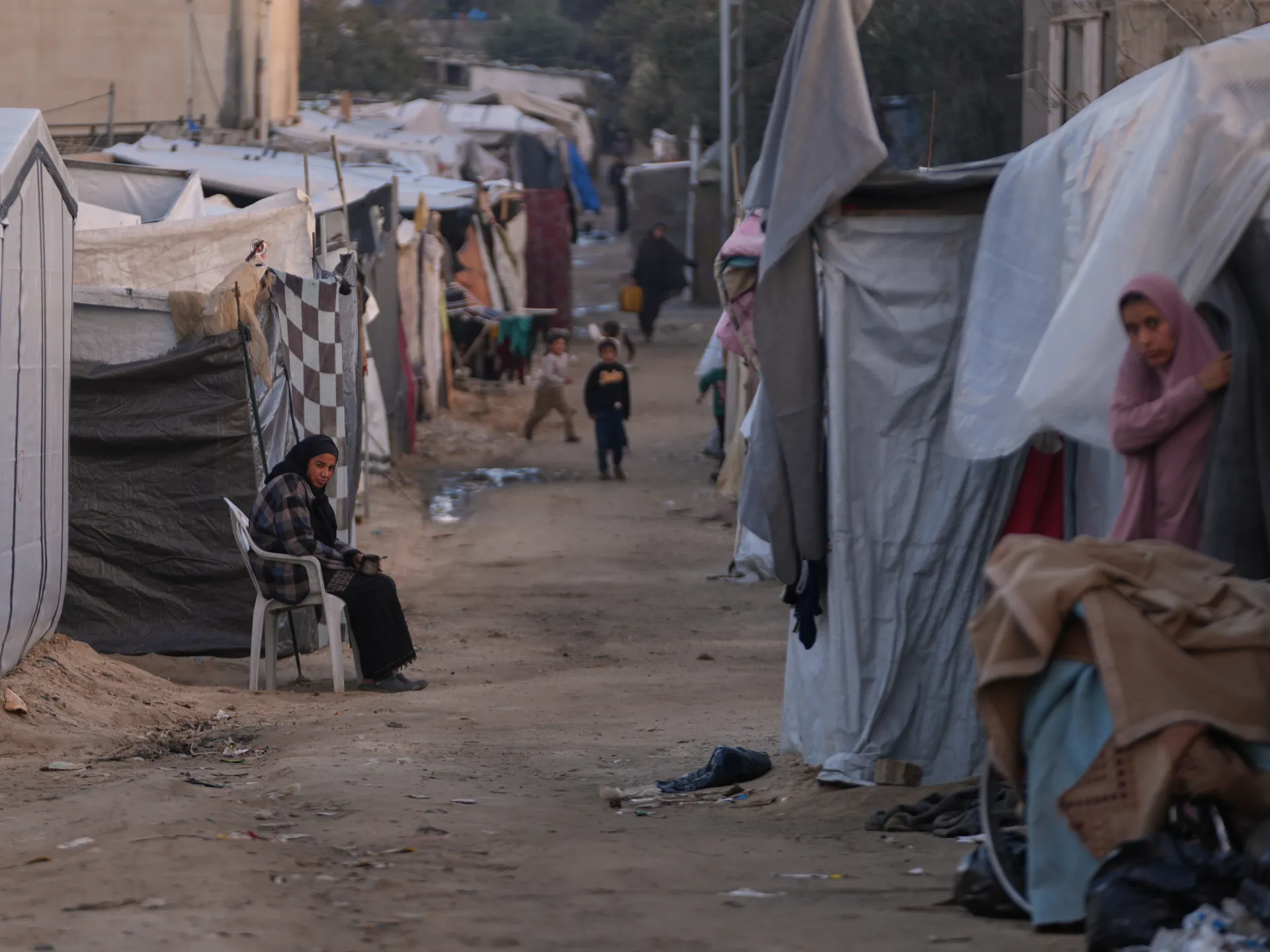
The Palestinian economy has been sliding into a sharp slowdown, influenced by extended conflict impacts in Gaza and tighter trade and mobility barriers in the West Bank. Movement restrictions, limited commercial access, and shrinking internal revenue have collectively reduced economic circulation. Public services, legal institutions, and administrative offices that rely on stable funding are now working under heavier pressure, often without sufficient financial buffers.
Over the past several years, the region’s economy has also faced overlapping crises, beginning with the pandemic and continuing into long-term conflict disruption. These events weakened business confidence, lowered household spending, and reduced investment activity. The combined effects have created a cycle where economic recovery becomes more challenging, not only because of reduced funds, but also due to damaged infrastructure and limited market access.
Recession Deepens, Jobs Disappear
A 2025 economic monitoring publication by Palestinian statistical and monetary authorities confirmed that recession has continued throughout the year. Gaza recorded an estimated 84% contraction in GDP when compared to 2023, while the West Bank showed a decline of around 13% in output during the same comparison period. These figures reflect a large-scale reduction in productivity rather than a short-term market dip.
Employment conditions in Gaza have become especially difficult. Unemployment surpassed 77% in 2025, affecting not only formal jobs, but also small commerce like local vendors and service-based work. While some sectors in the West Bank displayed slight improvements compared to 2024, overall economic activity has not returned to pre-conflict levels.
GDP per person has also dropped significantly—around 32% since 2023, aligning with international assessments indicating that economic conditions have regressed to levels seen decades ago. This regression is not described as permanent, but it highlights how economic engines struggle to function when trade, mobility, and funding remain constrained.
Frozen Revenues, Debt Climbs
One of the biggest fiscal stressors comes from the freezing of Palestinian clearance revenues. Economy Minister Mohammed al-Amour stated that roughly $4.5 billion in these revenues has been held back, directly impacting government operational capacity.
By late November 2025, public debt reached approximately $14.6 billion, representing more than 100% of GDP estimates from the previous year. This debt includes arrears to financial institutions, banks, suppliers, private-sector service providers, and delayed salary payments for public employees. The salary component alone amounts to billions in arrears, limiting household spending and weakening domestic demand.
Economists observing the situation note that the challenge is no longer just a temporary fiscal gap, but a structural paralysis factor. The government has continued operating to meet essential obligations, but without meaningful capacity for large-scale stimulus, investment-driven growth, or long-term economic acceleration.
Analysts have described this model as “reactive sustainability”—institutions are kept running, but growth potential remains highly constrained.
Fragile Recovery, Unclear Future
In response to the downturn, the Palestinian government introduced urgent support measures. These include reinforcing social protection programs, strengthening economic resilience for communities in Area C of the West Bank, and prioritizing assistance for small and medium-sized businesses. Productive sectors like industry and agriculture have been placed as priorities in transition support.
Import substitution is also being tested in select sectors to reduce dependency on Israeli goods, while digital and green-economy initiatives are being explored to diversify economic circulation. Interestingly, despite the downturn, around 2,500 new businesses continue to be registered each year, showing that entrepreneurial activity has not fully stopped, even under pressure.
However, many economists emphasize that the future depends on political and monetary shifts. Several economic paths have been outlined:
-
A continued gradual decline due to limited resources,
-
An internationally mediated support scenario at a decisive political moment, or
-
A conditional fiscal breakthrough tied to governance reform.
Although countries like France and Saudi Arabia publicly pledged financial support, analysts observing aid disbursement confirm that assistance has not yet materialized, keeping uncertainty high.
Key Insight
The Palestinian economy is not collapsing overnight, but it is being worn down steadily by disruption in trade, withheld revenues, shrinking productivity, and rising obligations. Experts stress that recovery will remain extremely fragile without restored revenues, renewed financial inflows, and an improved political environment.