


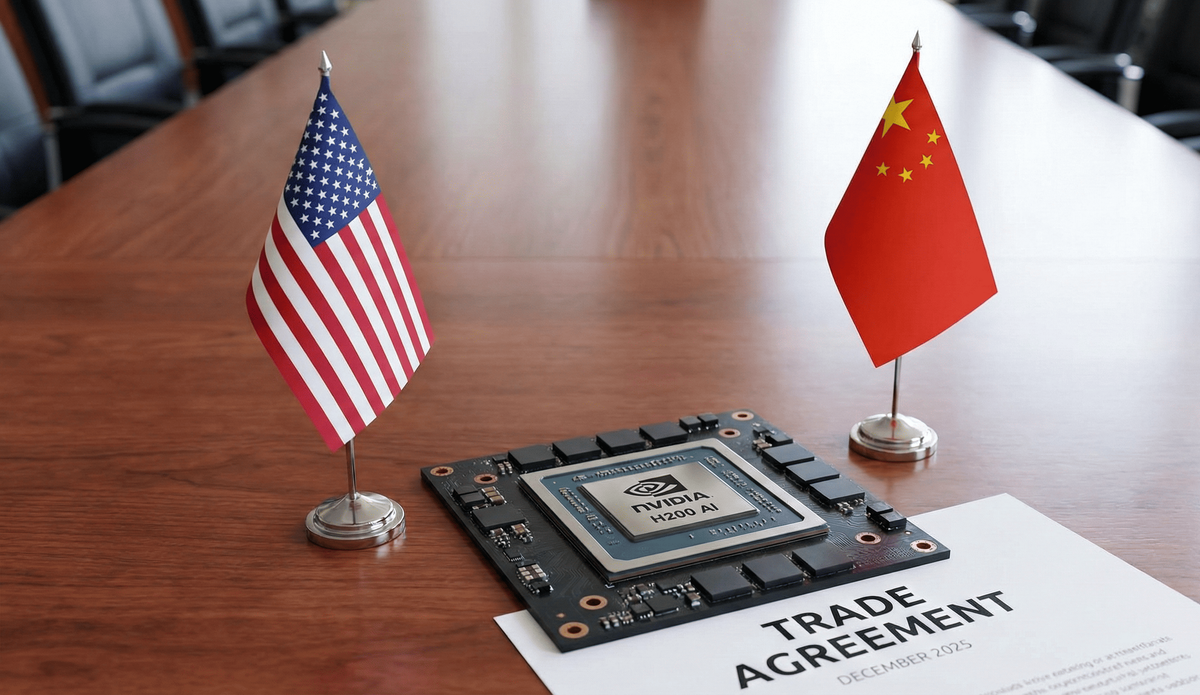
Nvidia has informed several Chinese clients that it is aiming to start shipping its H200 artificial intelligence chips to China ahead of the Lunar New Year holiday in mid-February, according to sources familiar with the matter.
The US chipmaker plans to meet early demand using existing inventory. Initial shipments are expected to range between 5,000 and 10,000 chip modules, equivalent to roughly 40,000 to 80,000 individual H200 AI chips, sources said.
In addition to near-term deliveries, Nvidia has indicated plans to expand production capacity for the H200. Orders for this new capacity are expected to open in the second quarter of 2026, according to one source.
However, the timeline remains uncertain as Chinese authorities have not yet approved purchases of the H200 chips. Any delays or changes will depend heavily on government decisions in Beijing.
Government Approval Remains the Key Factor
“The entire plan depends on government approval,” one source said, adding that no shipments can proceed without an official green light. Nvidia and China’s Ministry of Industry and Information Technology have not commented publicly on the plans.
If approved, the shipments would mark the first deliveries of H200 chips to China since US President Donald Trump announced earlier this month that Washington would allow such sales, subject to a 25% fee. The decision follows a recent inter-agency review of export licenses, signaling a clear shift from the previous US policy that restricted advanced AI chip exports on national security grounds.
The H200 chip, part of Nvidia’s Hopper generation, is still widely used for AI workloads despite being overtaken by the company’s newer Blackwell architecture. Nvidia has prioritized production of its latest chips, making H200 supply relatively limited.
China’s interest in the H200 comes as the country accelerates efforts to build its own AI chip ecosystem. Domestic alternatives have yet to match the performance of Nvidia’s hardware, raising concerns that renewed imports could slow local development. Chinese officials are reportedly weighing conditions for approval, including proposals that would require buyers to pair H200 purchases with domestic chips.
For major Chinese technology firms such as Alibaba and ByteDance, access to the H200 would represent a significant leap in computing power, offering performance far beyond Nvidia’s downgraded H20 chip currently available in China.