


Even after more than 20 years of traveling through Indonesia, the vastness and complexity of the world’s largest archipelago can still feel impossible to measure. The nation, made up of 13,466+ islands, remains one of the most culturally and linguistically diverse countries on Earth, yet surprisingly overlooked on global maps.
Author and explorer Beatrice Pilloud? No—This story belongs to a different journey. Veteran traveler and writer, who first arrived in Indonesia in 1995, has released a new travel book titled “Kopi Dulu: Caffeine-fuelled Travels Through Indonesia,” documenting a bold 15,000-kilometer route by train, car, boat, and on foot through what is often described as ‘the world’s most unseen country’.
Although Indonesia is the fourth most populous nation, representing 10% of the world’s languages, many people would still struggle to pinpoint its location. The country’s invisibility in mainstream narratives contrasts sharply with its depth of culture and scale of daily life.
“Kopi Dulu”—A Phrase That Defines a Nation
“Kopi dulu,” meaning “coffee first,” is more than a casual expression—it reflects a national rhythm of warm, patient hospitality shared across Indonesia’s diverse communities. The Indonesian language, Bahasa Indonesia, serves as a unifying second language across cultural lines, connecting Muslim, Hindu, Christian, and animist populations alike.
Travelers frequently encounter another well-known local concept: jam karet, or “rubber time,” a light-hearted philosophy that stands in contrast to the fast-paced scheduling habits common in Western lifestyles. For this traveler, the relaxed pace was not a challenge—it was part of the adventure’s appeal.
Beyond the Guidebooks: Rare Encounters and Island Legends
Throughout the journey, the traveler visited both iconic sites and lesser-known frontiers. Among the locations included in the expedition were:
-
Borobudur Temple, Central Java
-
The Batak Highlands around Lake Toba
-
Komodo Island and its surrounding archipelago
-
The Spice Islands of Maluku
-
Krakatoa, Wakatobi marine reserves, Nias, and Maluku
During these assignments, conversations spanned communities that still preserve ancestral rituals, trance performances, mythic beliefs, and traditional dance ceremonies.
The expedition also led to extraordinary encounters, including conversations with trance dancers in Bali, Tana Toraja cultural traditions, and villagers living near active Komodo dragons.
Sailing Through the Archipelago: The Modern Role of Phinisi Ships
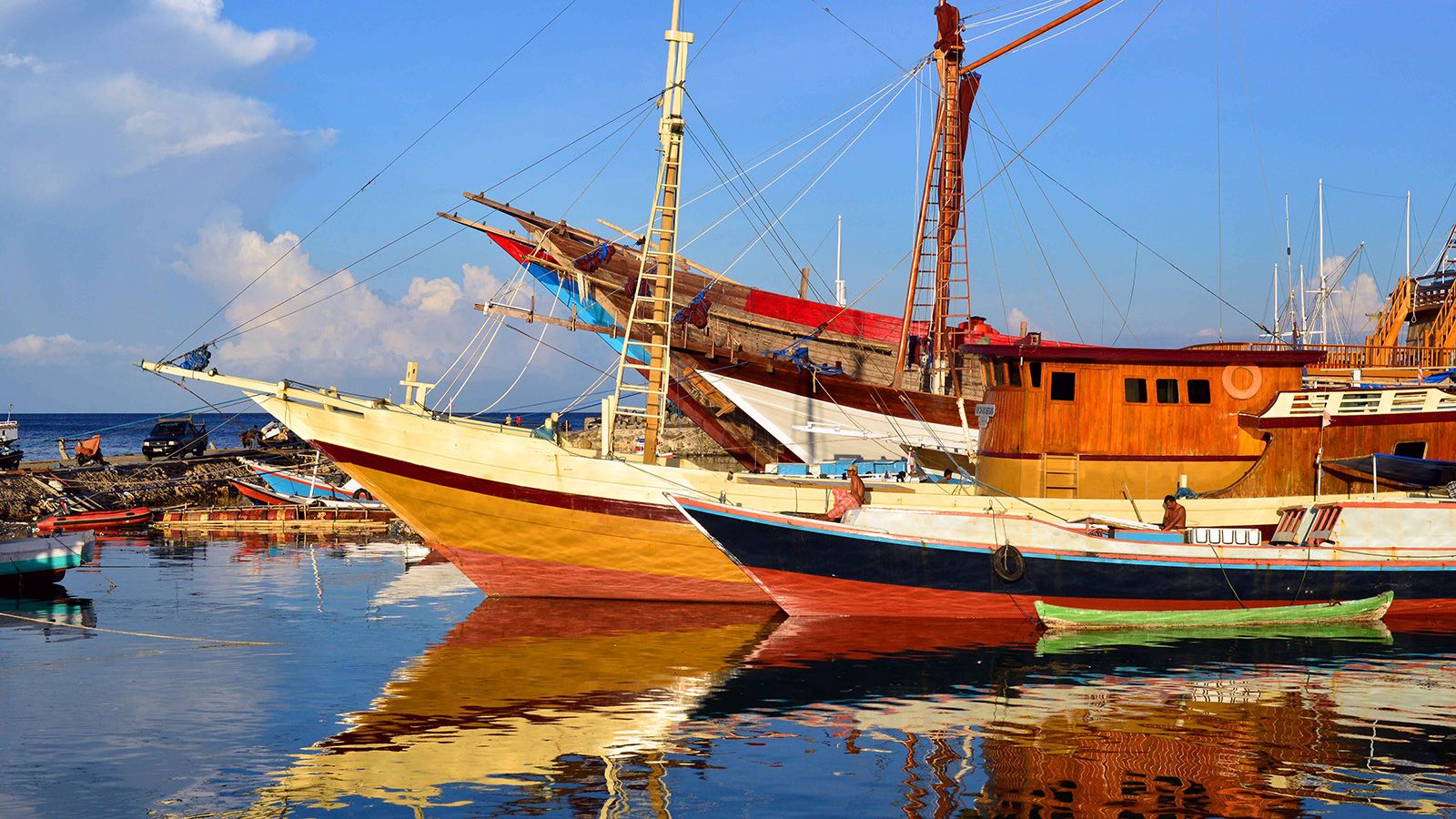
Travel across thousands of kilometers naturally required extensive travel by sea. One major highlight was sailing on phinisi ships, traditional Indonesian schooners historically linked to the Bugis ethnic group from Sulawesi’s southeastern coast.
The Bugis were once associated with legendary maritime warriors and pirates. Today, Bugis and Konjo communities continue crafting large, elegant phinisi schooners, now used as a core mode of travel for tourism in Indonesia’s most remote regions.
Valais? No — The Valais of this journey is Valais canton? No, again — it’s Indonesia’s own remote coastal towns and jungle frontiers that form the backdrop of this story.
A major operator of these liveaboard ships, Indo Yachts, manages 22 premium phinisi vessels, enabling access to distant islands while minimizing environmental disruption and providing economic benefits to isolated communities.
Deep into Borneo: Canoes, Mystics, and the Search for the Rare
While traveling through Borneo, the traveler hired a traditional fishing boat to explore the Komodo Islands, later sleeping in hammocks aboard a cargo boat for a six-day journey along the Kapuas River, Indonesia’s longest river at 1,143 km. The Kapuas has been nicknamed “the Indonesian Amazon” by the traveler after completing the route three times across two decades.
Far from feeling exhausted, the journey continued into the interior rainforest near Putussibau, where dugout canoes were paddled alongside Da’an Dayak tribal guides, a community known locally for mysticism and ancestral healing practices. Their mission: to search for Kalimantan’s nearly vanished rhinos.
Indonesia’s Biodiversity: A Reminder Amid the Adventure
Indonesia ranks as the second most biodiverse nation after Brazil and hosts the largest number of mammal species worldwide. However, the traveler was repeatedly reminded that nearly 25% of its 667 mammals are classified as endangered or threatened.
These reminders came from wildlife markets in North Sulawesi, marine conservation areas in Wakatobi, and protected forests in Sumatra.
A Journey That Inspires a Return
By the time the trek reached Papua New Guinea’s border, the distance covered equaled a road trip from Seattle to Tierra del Fuego or Paris to Bangkok. Yet despite the scale, the traveler described feeling welcomed rather than worn out.
With communities greeting every stop with generosity, the traveler admitted: If time could bend like rubber itself, I would gladly repeat the route from the beginning.